All our MRes courses may also form a discipline pathway for the South West Doctoral Training Partnership (SWDTP)
Study a Master of Research (MRes) degree at Ä¢¹½´«Ã½
Our MRes degrees prepare you for doctoral (PhD) study or a range of careers requiring data analysis skills. Explore opportunities and funding at Ä¢¹½´«Ã½.
How is an MRes different to other master's degrees?
A Master of Research (often called an MRes) is a master’s degree with a focus on research.
Whereas most master’s degrees - such as an MSc or MA - follow a series of structured units and end with a dissertation, MRes degrees are based on a research project. You’ll study taught units alongside this to develop your skills to carry out your project effectively.
The taught aspect of an MRes distinguishes it from other research-based degrees. Alternatives, like an MPhil, can be entirely project-based without additional teaching.
Often people choose to complete MRes degrees in preparation for doctoral study, as they're designed to provide the core research skills needed.
However, you can use the knowledge and expertise you’ll gain to progress to a range of non-academic careers with a research focus. This is particularly useful because many private and public sector organisations value people with the ability to provide actionable insights from qualitative and quantitative data.

MRes degrees at Ä¢¹½´«Ã½
We offer three MRes degrees. These focus on different subjects and can be a pathway to a PhD if you don’t have a suitable master’s degree. All are available as 1-year full-time or 2-year part-time study.
Fund your MRes
Our MRes degrees are eligible for Economic and Social Research Council (ESRC) funding through the South West Doctoral Training Programme (SWDTP).
If you want to pursue this, you’ll need to study a relevant MRes as part of a 1+3 award. The ‘1’ in this refers to your one-year MRes degree, which would be followed by ‘3’ years of doctoral study for your PhD.
The duration of the four years will be funded, but you’ll need to complete the MRes before you can progress to the PhD.
The 1+3 option offers the opportunity to broaden your knowledge and understanding of a topic and/or field, refine your research questions, and develop and focus your research skills. This will help to prepare you for your PhD studies.
Find out more about SWDTP funding and the 1+3 route
Skills to enhance your employability
Studying an MRes doesn’t mean you have to go on to do a PhD.
The mix of taught units and your research project will enhance your research skills and subject knowledge, which may make you more desirable to employers.
Across our MRes courses, we work to provide you with the tools and support to prepare you for employment and further study. This includes advanced quantitative and qualitative research skills, as well as bibliographic skills and how to use appropriate technology to undertake research tasks.
There is an increasing demand for high-level quantitative and qualitative research skills from a wide range of private and public sector recruiters. Many firms and government departments are now committed to data-driven decision-making, making use of the increased availability of big data.
An MRes degree can help you to demonstrate a hybrid skill set that combines quantitative, computing and analytical skills with an understanding of your chosen subject area.

Study in a research-focused environment
Our academic departments are research active. Their work changes lives, informs policy and practice, improves people's health and wellbeing, and contributes to economic growth.
92% of Ä¢¹½´«Ã½ research submitted to the Research Excellence Framework (REF) 2021 was classified as 4* or 3*, meaning it is ‘world-leading’ and ‘internationally excellent’.
As an MRes student, you’ll benefit from studying in an environment that values up-to-date research. You’ll be taught by experts in their fields, whose research influences the content of units we deliver.
Find out more about our research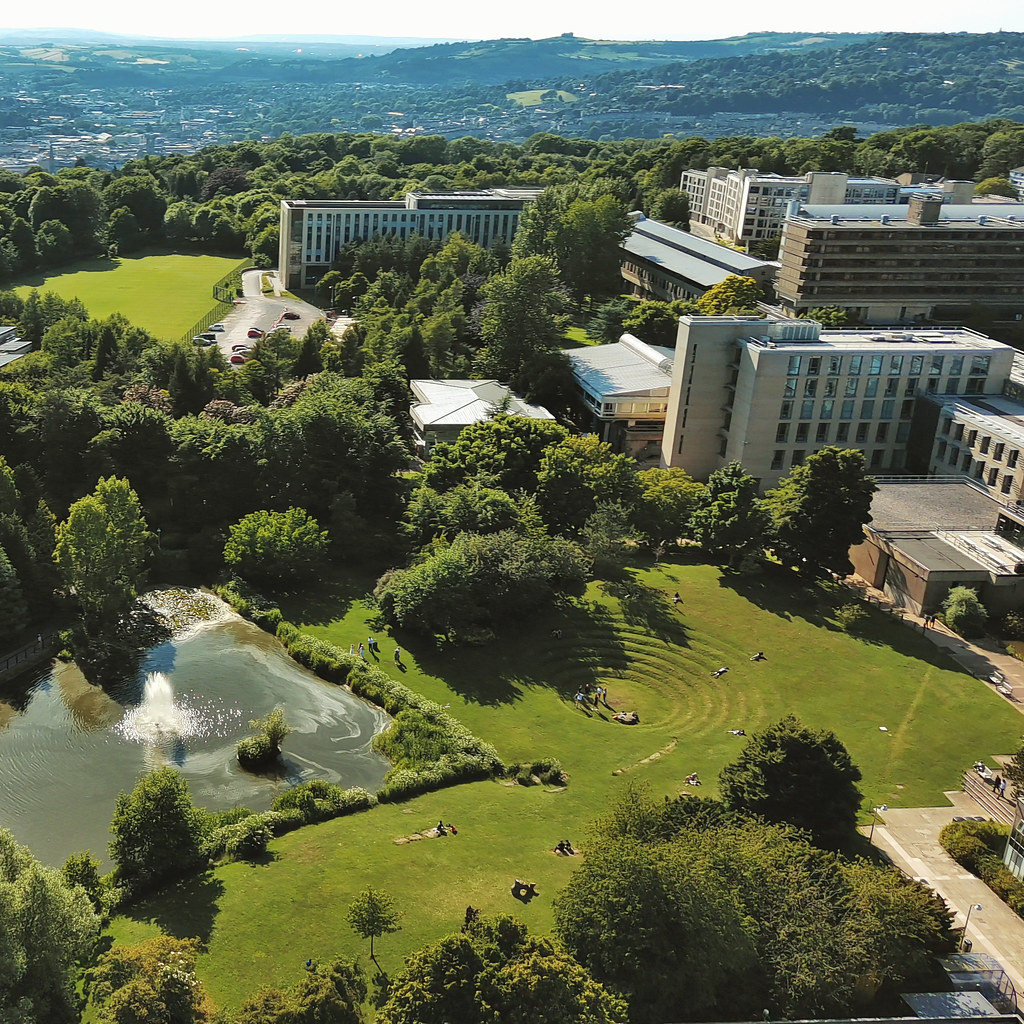
Stories from our students and graduates
Some of our students and recent graduates talk about studying MRes degrees at Ä¢¹½´«Ã½.

Now running Mamori.xyz, which uses academic knowledge to improve cybersecurity in the blockchain space, Andy Lee talks about studying MRes Economics at Ä¢¹½´«Ã½.

Driven by curiosity and ambition, Ramana chose to move abroad to Ä¢¹½´«Ã½ to pursue a research-intensive degree in the shape of MRes Psychology.

Samantha Stone talks about the benefits of studying for an MRes before moving on to a PhD.

Maike Klein, an MRes Social Work graduate, hopes to make a difference to the treatment of alcohol and drug addiction.
As an MRes student at the Ä¢¹½´«Ã½ with a valid Student Visa, you are not eligible to bring any dependants to the UK. This is because our MRes courses do not meet the criteria of being a full-time research-based degree, due to the inclusion of taught material. However, some scholarships or forms of sponsorship from governments may allow you to bring dependants. We advise that you seek these out if required.